AI /
NVIDIA pushes Perplexity toward 30 billion: the AI Agent era between record growth and speculation
NVIDIA pushes Perplexity to $30 billion: discover the role of AI agents, revenue growth, and the impact on bubble risk in the tech market.

Smart Shaped
Last update: August 2026
NVIDIA is reportedly in talks to invest in Perplexity in a funding round that would push the valuation over $30 billion, driven by the growth of AI agents and the Perplexity Computer product. At present, this news is reported by media sources and has not been officially confirmed. The central takeaway is the shift from "AI that answers" to "AI that executes tasks."
What is happening between NVIDIA, Perplexity, and AI agents
NVIDIA (a semiconductor and AI GPU company) is reportedly in discussions to join a new equity funding round for Perplexity (an AI search startup led by Aravind Srinivas) at a valuation exceeding $30 billion. Reuters, picking up a report from The Information, notes that the talks are not publicly confirmed and that the details come from sources familiar with the negotiations (August 24, 2026): Reuters (citing The Information).
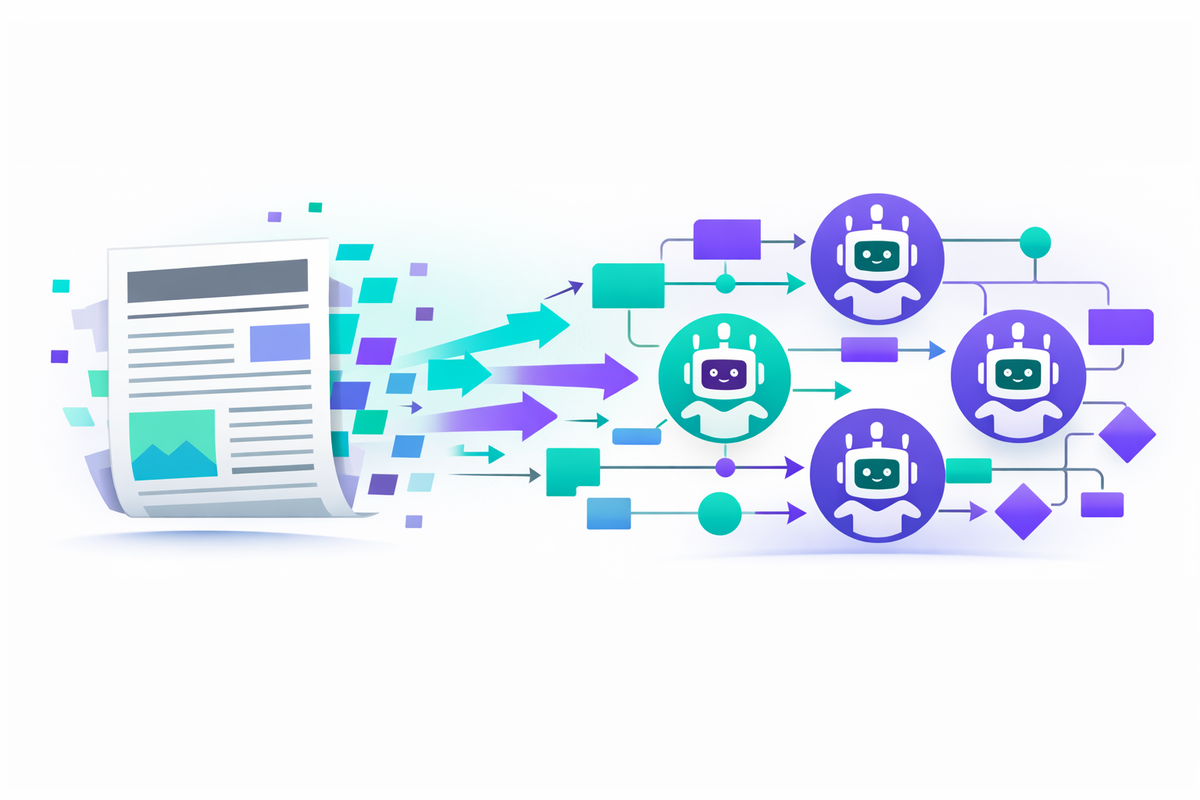
The benchmark that makes this headline noteworthy is straightforward: the discussed valuation would be over 50% above the approximately $20 billion threshold linked to its previous round (September 2025), according to the same reporting line cited by Reuters (August 24, 2026). In parallel, several market overviews highlight a sharply accelerating revenue run rate in 2026, often attributed to the agentic evolution of the product. Yahoo Finance summarizes the same arc (and reiterates the absence of official confirmation): Yahoo Finance.
What AI agents are and why Perplexity Computer matters beyond basic search
AI agents (software systems that plan and execute actions) are applications that go beyond generating text: they break down a goal, select tools, and perform operational steps across browsers, apps, or workflows. A Large Language Model (LLM, foundational model like GPT or Claude) serves as the "linguistic engine"; an AI search engine (assisted search) optimizes retrieval and synthesis; an operational agent adds execution and verification.
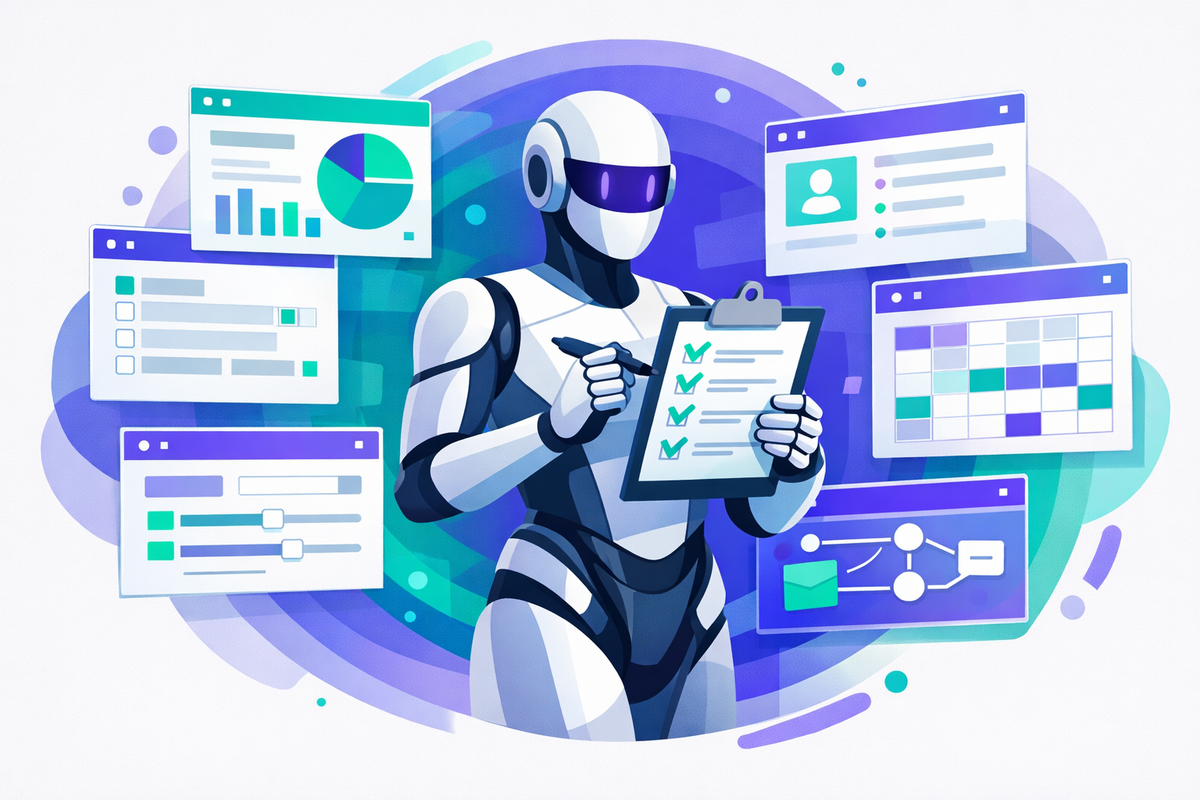
Perplexity Computer (Perplexity's cloud agent) falls into this third category: it is engineered to browse, fill out forms, orchestrate activities, and complete end-to-end tasks. Perplexity itself describes "Computer" as a general-purpose orchestrator for long-horizon objectives (2026): Perplexity Research.
| Category | Primary Function | Output | Example |
|---|---|---|---|
| Chatbot/LLM | Generates text and code | Conversational response | ChatGPT (OpenAI) |
| AI Search | Retrieves + summarizes sources | Cited response | Perplexity Search |
| AI Agent | Plans and executes actions | Completed task | Perplexity Computer |
| Enterprise Copilot | Assists with work tasks | Drafts + suggestions | Microsoft Copilot |
The reason NVIDIA is tracking agents comes down to economics: more execution requires more inference (runtime compute on GPUs), driving higher infrastructure demand over time.
Related deep dive: how AI agents accelerate development in microservices.
From basic search to action: the surge of Perplexity Computer
Perplexity's growth in 2026 is primarily framed as a transition from "assisted search" to "automated action." In 2026, its annualized revenue run rate reportedly climbed to over $750 million, up from below $250 million at the start of the year—more than tripling in a matter of months (FourWeekMBA, 2026): FourWeekMBA.
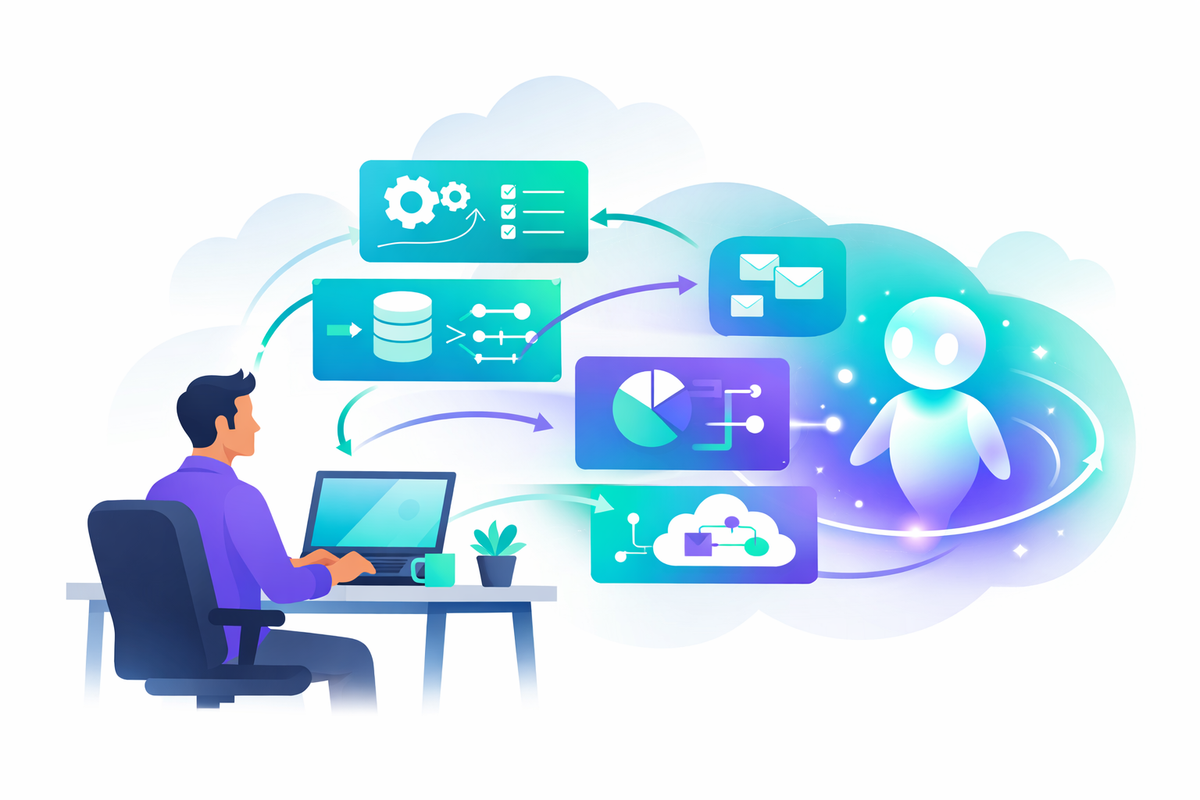
According to industry analysis, this momentum stems not only from its core "AI search" product, but from the launch of Perplexity Computer, a cloud-native AI agent built for professionals and enterprise users. The agent carries out computing tasks and multi-step workflows, expanding far beyond text generation and standard information retrieval.
This product evolution also signals a business shift: moving from usage-driven growth to enterprise monetization (seat-based models or B2B contracts). To handle the heavy inference workload, Perplexity reportedly sealed a $750 million cloud agreement with Microsoft Azure (highlighted in 2026 market overviews), reinforcing the reality that agentic AI demands significant infrastructure.
Why NVIDIA is investing downstream: Jensen Huang's strategy
NVIDIA is investing in Perplexity to secure a stake in the application layer driving inference demand, rather than focusing solely on the hardware tier. In other words, the thesis centers on being a "compute landlord": if AI agents become the new paradigm for work, demand for GPUs (and GPU-optimized software stacks) grows alongside the applications executing these tasks.
"The Information, with Reuters echoing the report, says Nvidia is in discussions to invest multiple billions of dollars in Perplexity as part of an equity round that would value the company at more than $30 billion. That figure is a discussed target, not a finalized valuation — the reporting is sourced to people familiar with the talks, Perplexity declined to comment, and Nvidia did not respond."
— Gennaro Cuofano, Founder, FourWeekMBA
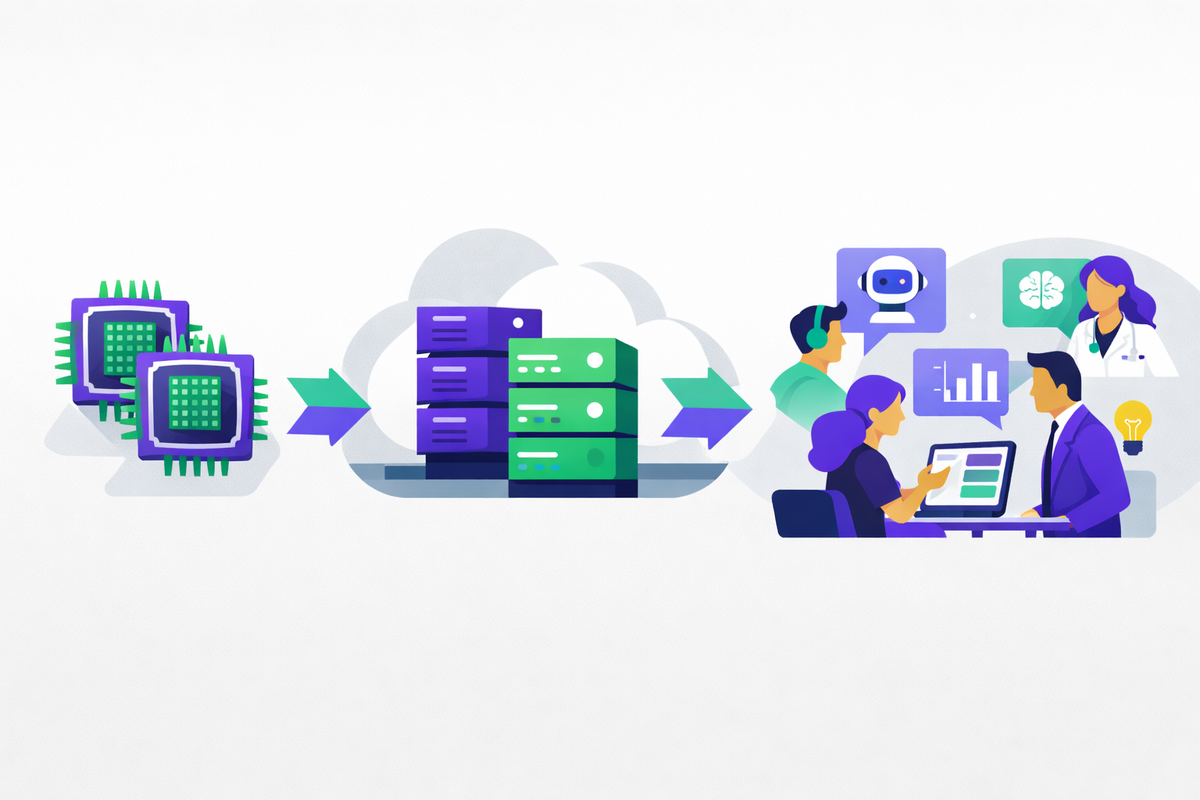
The value chain remains the key framework:
[ Hardware & Chips ] ---> [ Cloud Infrastructure ] ---> [ Agents & Applications ]
(NVIDIA GPUs) (Microsoft Azure) (Perplexity Computer)
| Layer | NVIDIA's Role | Why Perplexity Is Strategic |
|---|---|---|
| GPU / Acceleration | De facto standard for inference | Agents increase runtime compute consumption |
| Cloud / Hyperscaler | Optimized stack via partners | Enterprise distribution on Azure |
| Apps / Agents | Downstream future demand | Workplace interface and workflow engine |
To understand this strategy within NVIDIA's broader ecosystem: NVIDIA and the acquisition of Gretel for synthetic data in AI training.
Perplexity vs. OpenAI, Anthropic, and Google: technology, go-to-market, and agent pricing
Perplexity competes less on "frontier training" relative to OpenAI and Anthropic, focusing instead on combining AI search, agentic execution, and distribution. Google (Google AI Overviews in search results) centers on Search integration; OpenAI (ChatGPT) and Anthropic (Claude) focus on core models and developer platforms; Perplexity positions itself around a "search-to-action" product.

| Competitor | Product Focus | Agent Approach | Commercial Model | Advantage | Limitation |
|---|---|---|---|---|---|
| Perplexity | AI search + agent execution | Perplexity Computer (tasks) | Freemium/Pro + Enterprise (variable) | End-to-end workflows | High cost-to-serve |
| OpenAI | Model + platform | Tool use / agent frameworks | Seat + usage-based | Developer ecosystem | Integration dependency |
| Anthropic | Safety-first models | Tool use in Claude | API + enterprise plans | Reliability and safety policies | Smaller consumer footprint |
| Search + workspace | Integrated agentic features | Bundles + cloud services | Massive distribution | Search/ad model conflicts |
Regarding agent pricing: where specifics for Perplexity Computer are not public or remain variable, that distinction should be noted. Generally, agents are monetized through seat-based (per user) or usage-based (per task/token) models, but the underlying challenge remains cost-to-serve (infrastructure costs per task), driven by GPU usage, latency, and toolchain overhead. For competitive context: the future of LLMs with Amazon Olympus vs. Claude and the impact of US restrictions on Anthropic models and enterprise AI strategy.
Is a $30+ billion valuation sustainable, or does it signal an AI bubble?
A valuation exceeding $30 billion is defensible only if Perplexity converts usage growth into recurring enterprise revenue and sustainable margins; otherwise, speculative risks remain high. An AI bubble (a mismatch between expectations and fundamentals) forms when multiples are not backed by predictable cash flows. An annualized revenue run rate reflects short-term acceleration rather than consolidated GAAP revenue or guaranteed retention.
Why the multiple might be rational. If the 2026 run rate surpasses $750 million (FourWeekMBA, 2026), a $30 billion valuation implies approximately 40x sales, a level some observers regard as more "tolerable" in private markets than public ones (Tech Funding News, 2026): Tech Funding News. Additionally, agentic execution can boost ARPA (average revenue per account) compared to search alone.
Warning signs of market excess. The core risk lies in vendor-financed AI (a circular capital flow between chips, cloud providers, and app developers): NVIDIA invests in software, software vendors purchase cloud capacity, and cloud providers buy GPUs. Furthermore, the European Central Bank (ECB) has repeatedly highlighted market concentration and stretched valuations across tech and AI segments in its financial stability assessments. In short: the valuation holds only if agents become monetizable workflows rather than GPU-draining demos.
For an operational framework on metrics and deployment sustainability: comprehensive analysis of LLMOps deployments and AI growth metrics.
When a Perplexity IPO could happen and key hurdles ahead
A Perplexity IPO becomes realistic only after greater transparency around revenue, margins, and the economic sustainability of AI agents. Without disclosures aligned with Wall Street standards (ARR, net revenue retention, gross margins, enterprise mix), a $30 billion narrative remains vulnerable. Moreover, there is no official confirmation of an upcoming IPO date; available insights rely primarily on strategic statements and press coverage.
| Milestone | Round / Event | Estimated Valuation | Source |
|---|---|---|---|
| Sep 2025 | Previous funding round | ~$20B | Free Press Journal |
| Jan 2026 | Series E-6 (reported) | ~$23B | Free Press Journal |
| Aug 2026 | New round talks (reported) | >$30B | Reuters (citing The Information) |
Major obstacles include margin pressure from GPU costs, intense competition from Google and OpenAI, the quality of enterprise revenue (multi-year contracts vs. volatile usage), and governance requirements. For an encyclopedic overview (showing varying estimates across sources): jimmy·research.
What the Perplexity case teaches enterprises adopting AI agents
Organizations should approach AI agents as operational workflows to be measured, not simple chatbots. In sectors like banking and academia, value emerges when agents perform repetitive tasks securely, with full auditability and oversight. For cloud deployments and integration, typical architectures leverage APIs, platforms like Microsoft Azure (enterprise hyperscaler), and MLOps tooling (release pipelines and monitoring).
1) High-ROI use cases (banking and higher education)
- Document search across policies, procedures, regulations, and internal knowledge bases.
- Onboarding new employees or students using checklists and guided workflows.
- Internal support (IT/HR) through automated triage and ticket creation with complete data.
- Task completion (forms, reports, requests) with built-in validation and approval steps.
2) Key KPIs to measure (beyond initial pilot enthusiasm)
- Time saved per process (minutes per task) and overall completion rate.
- Cost per task (compute + licensing) and error rate (human correction rate).
- User adoption (active users) and team retention metrics.
3) Common pitfalls and how to avoid them
- Hallucinations: enforce human-in-the-loop oversight and ground responses in verifiable sources.
- System access controls: implement IAM policies, least privilege principles, and auditing logs.
- Data quality: maintain data catalogs and test against representative datasets.
- Inference costs: set per-task execution limits, implement caching, and evaluate cost-to-serve.
- Compliance: classify risk tiers and establish governance controls (EU AI Act).
For a practical adoption roadmap: tools for adopting AI agents in SMEs and managing AI governance and EU AI Act compliance in enterprise.
FAQ
Is NVIDIA's investment in Perplexity at a $30+ billion valuation confirmed?
No: as of August 24, 2026, it is reported by news outlets citing sources familiar with the discussions, but has not been officially confirmed by NVIDIA or Perplexity. The $30+ billion valuation should be understood as a target under discussion, not a finalized figure.
What does an AI agent do differently than a chatbot?
An AI agent completes a goal by taking active steps across tools (browsers, apps, APIs), rather than just generating text. It plans steps, gathers data, fills out forms, and delivers a verifiable outcome. A chatbot, by contrast, provides conversational answers and drafts without native operational execution.
Why do AI agents drive up infrastructure costs?
AI agents require more inference because they operate iteratively: planning, executing, checking results, and repeating steps. Each loop consumes tokens, API calls, and GPU compute time, especially during complex tasks. This makes tracking cost-per-task, caching, and setting execution boundaries essential.
How "expensive" is a $30 billion valuation for Perplexity?
If its revenue run rate reaches around $750 million in 2026, a $30 billion valuation represents roughly 40x sales. Tech Funding News (2026) notes that such high multiples are more common in private markets than public markets, where profit margins face stricter scrutiny.
What is the most common mistake when deploying AI agents in an enterprise?
Treating them like "smarter chatbots" rather than accountable operational workflows. Without human-in-the-loop safeguards, logging, and access controls, an agent can perform non-compliant actions or act on incomplete data. Establishing clear processes, KPIs, and governance before scaling is key.