AI /
Falcon Mamba: A new frontier in natural language processing.
Falcon Mamba 7B: The Open-Weight LLM Without Transformers. Discover How the Mamba Architecture Handles Long Contexts While Reducing Memory Costs and Latency.

Smart Shaped
Last update: August 2026
Falcon Mamba 7B is a 7-billion-parameter open-weight language model from the Technology Innovation Institute (TII), built on the Mamba architecture (a State Space Language Model, SSLM). It is engineered to handle long contexts with a more memory-efficient profile than Transformers in certain workloads. Technical reports indicate training on ~5.8T tokens and a "pure state-space" design without self-attention.

What Falcon Mamba 7B is and why it matters for NLP in 2026
Falcon Mamba 7B (an open-weight LLM) is a 7-billion-parameter language model developed by Abu Dhabi's Technology Innovation Institute and distributed across the Hugging Face ecosystem. Its defining feature is the use of Mamba (a state-space architecture) instead of the traditional self-attention mechanism found in Transformers, aimed at scaling better over long contexts. According to a structured technical overview of the Falcon family, the model was trained on approximately 5.8 trillion tokens and uses a training window around 8K tokens (Systems Analysis, updated 2026: https://systems-analysis.ru/eng/Falcon_(language_model_family)).
A State Space Language Model (SSLM) updates an internal "state" along the sequence rather than comparing every token against all others. In 2026, this approach is relevant because many real-world NLP pipelines (RAG, compliance, research) require long-context capabilities alongside predictable operational costs.
- More usable context across lengthy documents (reports, policies, papers).
- Better memory/throughput efficiency during certain long-sequence inferences.
- Easier experimentation enabled by open-weight access on Hugging Face.
How Falcon Mamba works
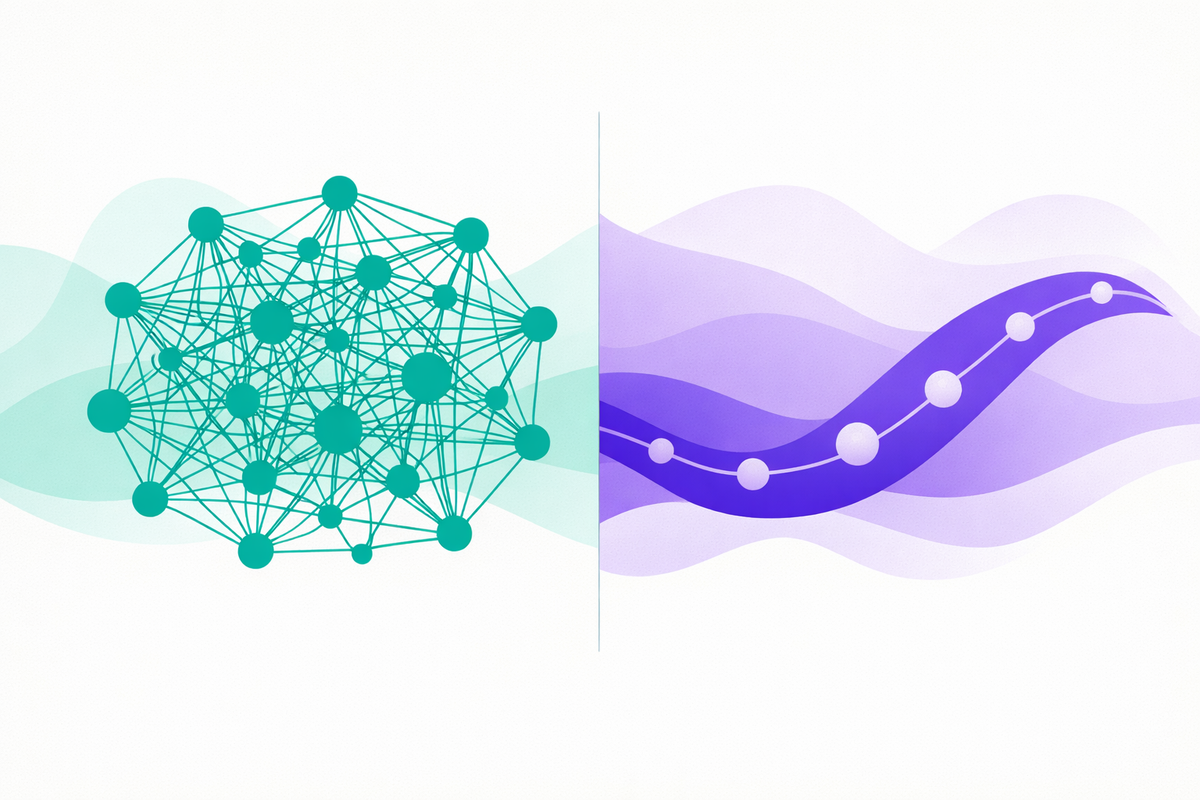
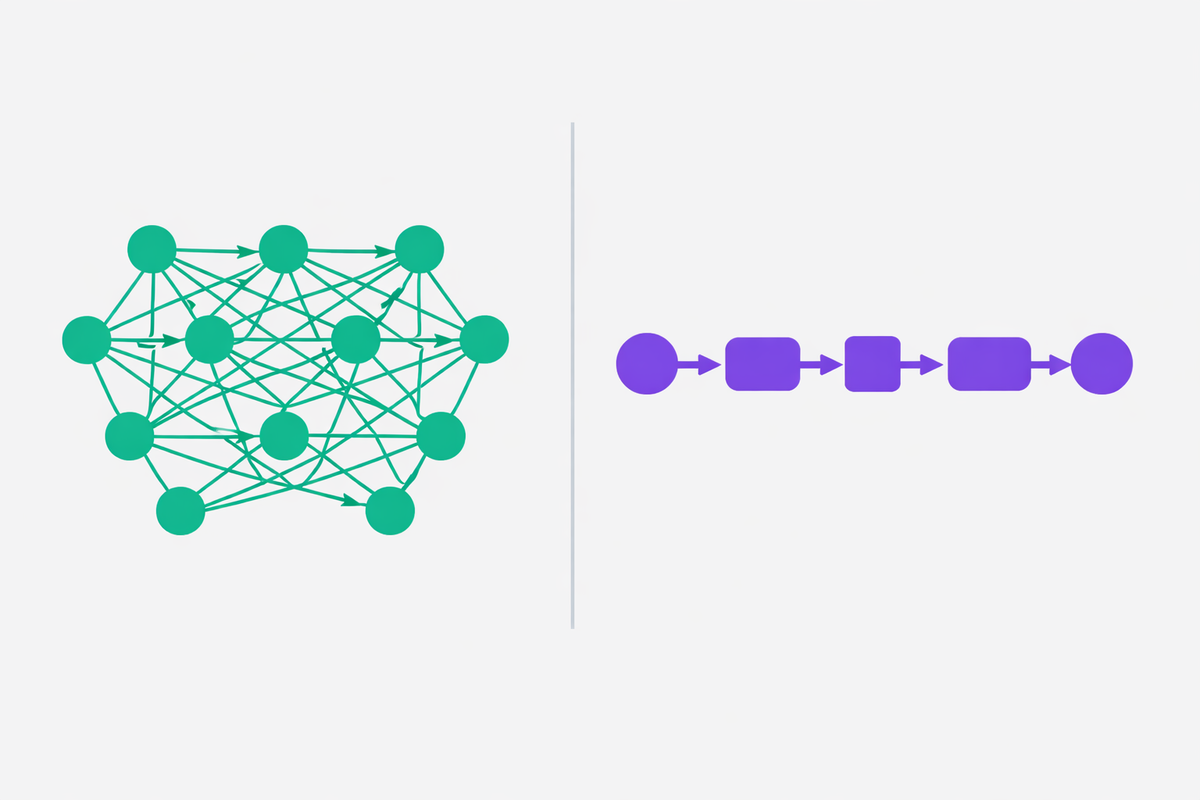
Falcon Mamba processes long text without relying on the full self-attention mechanism of Transformers. Instead of comparing every word with every other word (as in traditional Transformer models), the Mamba architecture continuously updates its internal "state" as it processes tokens, focusing on the most relevant information. This alternative approach allows it to handle longer text sequences without sacrificing performance.
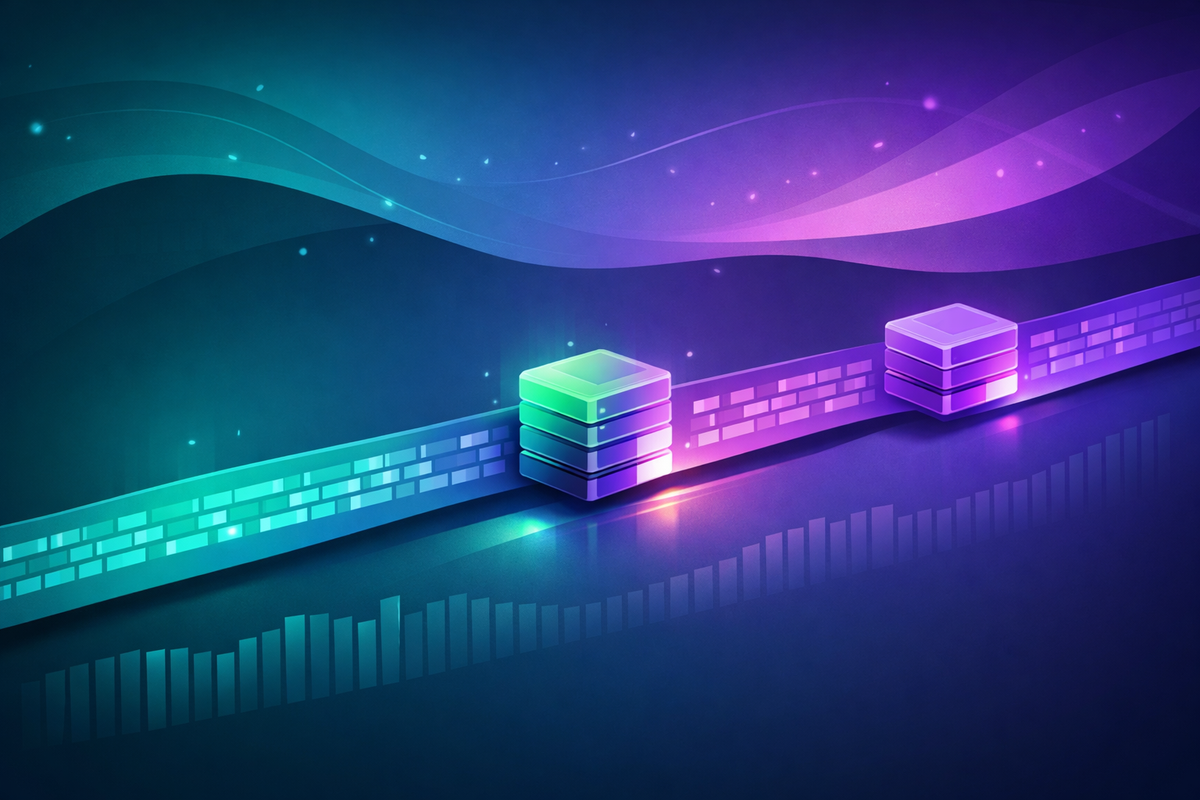
As suggested in Figure 1, the internal state updates step-by-step: increasing sequence length leads neither to a significant spike in memory footprint—thanks to its leaner architecture—nor to a drop in text generation speed.
In practice, a state space model offers a more favorable computational complexity curve on long sequences compared to quadratic self-attention. This aligns with comparative descriptions that attribute linear time complexity and virtually constant memory requirements relative to context length to Mamba models (Vantaige, 2026: https://vantaige.io/ai-tool/falcon).
Furthermore, Falcon Mamba was trained on a massive dataset of refined web corpora and "high-quality" technical data to ensure strong overall performance (Kunsch, 2026: https://www.alphaxiv.org/@guillaume-kunsch).
Why Falcon Mamba is innovative: the benchmarks that make it competitive
Falcon Mamba 7B stands out because it is among the first "pure Mamba" models at the 7B scale to compete directly with open-weight Transformer models across general benchmarks, despite its distinct architectural foundations. In the 2026 technical report, it is presented as a Mamba base model trained on 5.8T tokens using a curated data mixture (Kunsch, 2026: https://www.alphaxiv.org/@guillaume-kunsch).
In this technical report, we present Falcon Mamba 7B, a new base large language model based on the novel Mamba architecture, trained on 5.8 trillion tokens with carefully selected data mixtures.
— Guillaume Kunsch, Lead author of the Falcon Mamba 7B technical report
| Model | Architecture | Training Scale (source/year) | Key Advantage | Benchmark Note |
|---|---|---|---|---|
| Falcon Mamba 7B | Pure Mamba (SSLM) | ~5.8T tokens (Kunsch, 2026) | Long-context efficiency | Competitive on open leaderboards |
| Mistral 7B | Transformer | N/A here (not 1:1 comparable) | Mature tooling | Common test baseline |
| Llama 3.1 8B | Transformer | N/A here (not 1:1 comparable) | Versatility & community | Strong general performance |
| Falcon2 11B | Transformer | N/A here (Falcon family) | General robustness | Close in average scores |
| Other SSLMs (2026) | SSM / Hybrids | Classification (Local AI Master, 2026) | Targeted efficiency | Not all are "pure" Mamba |
"Competitive" does not mean "superior in every task": benchmarks vary across datasets, prompts, and evaluation harnesses. A frequently cited reference point in comparisons is Hugging Face's Open LLM Leaderboard, where Falcon Mamba was recognized as one of the strongest open SSLMs at launch (Vantaige, 2026: https://vantaige.io/ai-tool/falcon). The takeaway: solid overall performance combined with potential architectural advantages over long contexts, which should be validated against your specific domain.
Falcon Mamba vs. Transformers and other SSLMs: practical differences in architecture and efficiency
Falcon Mamba does not replace Transformers entirely, but it delivers a specific edge in managing long contexts efficiently while optimizing memory/throughput profiles for certain workloads. In an SSLM like Mamba, processing relies on state updates rather than full self-attention, fundamentally altering inference over extended sequences (Vantaige, 2026: https://vantaige.io/ai-tool/falcon; Local AI Master, 2026: https://localaimaster.com/blog/mamba-state-space-models-guide).
| Criterion | Falcon Mamba (SSLM) | Classic Transformer | Best Suited When |
|---|---|---|---|
| Core Mechanism | State updates (Mamba) | Self-attention | SSLM for long contexts |
| Long-context Memory | More stable | Grows with sequence length | Long docs, report QA |
| Training Parallelization | Different/Less standardized | Highly optimized | Transformers for mainstream training |
| Tooling & Integrations | Growing | Highly mature | Transformers for complex ecosystems |
| Fine-tuning | Supported (e.g., LoRA) | Extensively documented | Transformers for junior engineering teams |
Operationally, many development teams rely on PyTorch and Hugging Face Transformers as standard deployment stacks. Consequently, even if a Mamba model offers operational efficiency, potential friction points (tooling support, quantization, monitoring) must be weighed: Transformers like Mistral or Llama often remain the "safer" choice when rapid integration and out-of-the-box features are required. For a broader overview of non-Transformer architectures in 2026, see the technical analysis (Youngju.dev, 2026: https://www.youngju.dev/blog/culture/2026-05-16-foundation-model-architectures-beyond-transformer-2026-mamba-hyena-rwkv-retnet-griffin-jamba-xlstm-ttt-dit-moe-flash-attention-3-deep-dive.en).
Training data, licensing, and the state of the Falcon Mamba ecosystem
Falcon Mamba owes its performance to a large-scale training regime and open distribution that encourages adoption. Technical profiles highlight ~5.8T tokens of training and position Falcon Mamba 7B as a "pure" Mamba-based model (Systems Analysis, updated 2026: https://systems-analysis.ru/eng/Falcon_(language_model_family)). The 2026 technical report also mentions multiple checkpoints and variants, including quantized versions available on Hugging Face (Kunsch, 2026: https://www.alphaxiv.org/@guillaume-kunsch).
Regarding training datasets, public documentation details refined web corpora, technical data (specialized documentation and text), and quality-filtered mixes (Kunsch, 2026). Regarding licensing: always check the official model card on Hugging Face and the specific license terms of the release, as "open-weight" does not automatically imply "unrestricted commercial use." For a refresher on operational licensing, see differences between open source and free software.
Ecosystem indicators: beyond repositories and model cards, traction is typically measured through community discussions and issue tracking. For up-to-date insights, the 2026 SSLM guide categorizes Falcon Mamba in a comparative table distinguishing "pure Mamba" models from subsequent hybrid architectures (Local AI Master, 2026: https://localaimaster.com/blog/mamba-state-space-models-guide).
Where Falcon Mamba adds value: use cases, RAG, and long-context scenarios
Falcon Mamba 7B is especially compelling when a problem demands processing lengthy text, controlling costs, and maintaining repeatable NLP pipelines. In RAG (Retrieval-Augmented Generation) scenarios, efficient context handling reduces the need for aggressive chunking and complex summarization chains, particularly during question answering (QA) over extensive documents. The goal is delivering more coherent responses without driving up memory usage or latency.
Typical use cases include: (1) summarization of long reports and meeting minutes, (2) QA over internal policies and technical manuals, (3) document analysis and classification across large archives, and (4) assisted text generation for internal knowledge bases. For an operational look at production metrics and architecture choices, see comprehensive analysis of LLMOps deployments in 2025.
Limitations, risks, and when Falcon Mamba is not the best choice
Falcon Mamba is promising, but it does not eliminate the trade-offs inherent to open-weight models and emerging architectures. The primary limitation is ecosystem maturity: the Transformer ecosystem (Llama, Mistral) benefits from more mature tooling, best practices, and integrations for quantization, serving, and observability. This is crucial for enterprise environments where operational predictability matters as much as accuracy.
Second limitation: benchmarks are not always directly comparable 1:1. Different leaderboards use varying test sets, prompts, and evaluation harnesses; an advantage in long-context processing does not guarantee superiority in reasoning, coding, or tool use. Third limitation: safety and alignment (mitigating hallucinations, bias, and output controls) often require dedicated evaluation, especially in sensitive domains.
For banking compliance, a rigorous validation process is required—including tests on representative datasets, auditability, logging, and output policy enforcement. Teams must monitor data quality risks and performance degradation over time, keeping in mind the risks of model collapse in artificial intelligence. A Transformer model often remains the safer choice for minimizing operational risks and satisfying regulatory demands.
Is Falcon Mamba worth testing? Final assessment and FAQ
Verdict. Falcon Mamba 7B is well worth a evaluation if your primary use case involves long contexts (lengthy documents, RAG pipelines, archival text analysis) and you can dedicate resources to a technical evaluation on the Hugging Face/PyTorch stack. It is less suited if you require plug-and-play integrations, maximum ecosystem maturity, or pre-standardized safety guarantees. For banking institutions and academic entities, the optimal approach is a controlled pilot with defined metrics, governance, and testing on real-world data.
How much does it cost to run Falcon Mamba 7B in production?
Falcon Mamba 7B does not carry a standalone "license fee": the main costs stem from infrastructure (GPU/CPU), serving, and governance. A key advantage of SSLMs is a more stable memory profile over long contexts, which can reduce compute waste in specific workloads (Vantaige, 2026).
What is the most significant difference between Falcon Mamba and a Transformer like Llama or Mistral?
The primary difference is architectural: Falcon Mamba uses a state update mechanism (SSLM) instead of the self-attention mechanism typical of Transformers. This design favors efficiency over long sequences, whereas Transformers generally offer superior tooling maturity, optimization, and standard ecosystem integrations.
Does the license permit commercial use of Falcon Mamba 7B?
The answer depends on the specific license terms listed in the official model card and release documentation. "Open-weight" does not automatically mean "unrestricted commercial use." Before deploying to production, review all clauses, attribution requirements, and usage restrictions in the model license.
How long does it take to integrate Falcon Mamba 7B into a RAG pipeline?
A baseline integration (loading the model, creating an inference endpoint, setting up vector database retrieval, and building prompt templates) typically takes 1–3 days for an experienced engineering team, plus evaluation time on real datasets. In regulated sectors (such as banking), additional time must be allocated for governance, logging, and validation.
Is Falcon Mamba 7B suitable for languages other than English and for long-context tasks?
It is well-suited for long-context tasks where sequence length is the bottleneck, but performance per language depends heavily on the training data mix and domain-specific evaluations. Training is reported at ~5.8T tokens (Systems Analysis, updated 2026), but targeted testing on Italian and domain-specific language remains essential.